9 min read
I used to think being strong meant being able to handle whatever life threw at you.
You figure it out. You keep going. You don't have time to sit around feeling sorry for yourself because somebody is depending on you.
And for a long time, that's exactly how I lived.
I became a mother at 14 years old. I was still a child myself, learning about life while being responsible for another life.
I didn't have the luxury of knowing everything before I had to make decisions. I learned by doing. Sometimes I got it right. Sometimes I didn't.
And sometimes, I look back and think, Girl, you really had no idea what you were doing.
But I kept going.
I've experienced things I wouldn't wish on anyone, including homelessness with my children.
And when you've been in a position where you're trying to figure out where you and your children are going to sleep, you begin to see life differently.
You learn how quickly things can change.
You learn how to make something out of very little.
You learn how to keep a smile on your face when your heart is heavy because you don't want your children to carry the same worry you're carrying.
But here's something I've come to understand:
Just because I survived something doesn't mean I want my children to experience it.
And just because struggle helped shape me doesn't mean struggle has to be their teacher.
I Had Good Parents. And I Still Had Things to Learn.
I want to make something very clear.
I had great parents.
I was loved. I was taught values. I had people who cared about me and wanted the best for me.
And I am grateful for that.
But I've learned that having good parents doesn't mean you'll enter adulthood knowing everything you need to know.
Our parents teach us from what they know, what they've experienced, and what life has taught them.
And sometimes, even with the best intentions, there are lessons we have to discover for ourselves.
There were things I had to change.
Things I had to unlearn.
And things I had to teach myself before I could teach them to my children.
One of the biggest?
Patience.
Whew. That one!
I don't think I truly understood patience for a long time.
When you've spent so much of your life having to figure things out quickly, waiting can feel uncomfortable.
If something needed to be done, I wanted it done.
If there was a problem, I wanted a solution.
If life wasn't moving the way I thought it should, I wanted to know WHY.
And preferably by yesterday!
I didn't always understand that everything doesn't have to happen immediately.
That every situation doesn't need an instant reaction.
That sometimes people need grace instead of a lecture.
And that children, especially, need room to grow.
I was learning how to be patient with my children while still learning how to be patient with myself.
That's not always an easy thing to admit.
But it's the truth.
Sometimes We Parent From Survival Instead of Peace
When you've experienced instability, you can become so focused on making sure nothing goes wrong that you forget to enjoy what's going right.
You want your children to be prepared.
You want them to listen.
You want them to understand how serious life can be.
Because you've seen what happens when things fall apart.
And sometimes that fear shows up in the way you parent.
You might be quicker to correct than to listen.
Quicker to worry than to celebrate.
Quicker to say, "You need to understand how the world works," when maybe your child just needs a little reassurance.
Not because you don't love them.
But because you've spent so much time trying to protect them from the things you've already lived through.
I had to learn that my experiences were not supposed to become my children's fears.
They deserve the wisdom I've gained without having to inherit every worry that came with it.
That's something I'm still working on.
Because motherhood doesn't come with a graduation ceremony where somebody hands you a certificate and says, "Congratulations! You officially know what you're doing!"
If it did, I think a whole lot of us would still be waiting for our diplomas.
I Want Them to Remember More Than What We Survived
There was a time when my biggest concern was simply making sure my children had what they needed.
A roof over their heads.
Food to eat.
Clothes to wear.
A sense of security, even when I wasn't sure how everything would work out.
Those things mattered. They still do.
But as I've gotten older, I've started thinking about the memories and feelings my children will carry into adulthood.
When they think about home, what will they remember?
Will they remember laughter?
Will they remember being able to come to me when something went wrong?
Will they remember feeling heard, even when we disagreed?
Will they remember that they didn't have to be perfect to be loved?
I hope so.
Because I don't want my children to only remember how hard I worked or how much I sacrificed.
I want them to remember that we lived, too.
That we laughed.
That we made memories.
That we enjoyed each other's company.
That even when life was difficult, there was still love in our home.
And I want them to know that the difficult chapters of our story do not define everything that comes afterward.
Strong Roots Aren't Built Through Fear
When I think about roots, I think about the foundation we give our children.
Not just financially.
Emotionally.
Spiritually.
In the way we communicate.
In the way we love.
In the way we handle conflict and disappointment.
For a long time, I thought preparing children for the world meant making sure they understood how hard it could be.
And yes, our children need to understand responsibility. They need to know that actions have consequences and that everything won't always go their way.
But they also need to know that the world holds beautiful things.
That there are good people.
That mistakes can be corrected.
That asking for help isn't weakness.
And that being kind doesn't mean allowing people to mistreat you.
I want my children to have strong roots in faith, love, family, respect, and confidence.
But I also want them to have a soft place to land.
A place where they can say, "I messed up," without believing they've lost my love.
A place where they can ask questions.
A place where they don't feel pressured to grow up before they're ready.
Because I know what it feels like to take on grown-up responsibilities at a young age.
And I don't want that to be their story.
Learning to Apologize Is Part of Parenting, Too
Here's something else I've had to learn:
Being the parent doesn't automatically mean you're right.
Now, don't get me wrong. I'm still the mama!
But I've learned that I can be the adult, set expectations, and still acknowledge when I could have handled something differently.
I can say, "I shouldn't have raised my voice."
Or, "I didn't listen the way I should have."
Or simply, "I'm sorry."
That doesn't take away my authority.
I believe it teaches my children something important.
That accountability isn't just for kids.
That respect should go both ways.
And that loving somebody means being willing to grow, even when it's uncomfortable.
I want my children to understand that they can make mistakes and still become wonderful people.
And I have to be willing to show them what that looks like.
Breaking Cycles Doesn't Mean Rejecting Where You Came From
I think sometimes when people hear the phrase breaking generational cycles, they assume it means somebody must have had terrible parents or a terrible childhood.
But that isn't always the case.
Sometimes breaking a cycle means building on the good things you were given.
Keeping the traditions that brought your family together.
Holding on to the values that helped shape you.
Remembering the people who prayed for you, encouraged you, and made sacrifices you may not have understood until you got older.
And then recognizing where you can do something differently.
Maybe you learn to communicate more openly.
Maybe you become more intentional about spending time together.
Maybe you learn to manage your emotions before responding.
Maybe you teach your children something you had to learn the hard way.
You can honor the people who raised you while still choosing to grow beyond what they knew.
To me, that isn't disrespect.
That's progress.
That's what generations are supposed to do.
We take what was planted before us, care for it, and help it grow.
God Is Still Working on Me, Too
My faith has been an important part of my journey.
And one thing I've come to understand is that God doesn't stop working on us just because we become parents.
I'm still learning.
Still growing.
Still praying for wisdom.
And definitely still working on my patience!
There are things I wish I had understood earlier in life.
There are situations I wish I'd handled differently.
But I also know I can't go backward and rewrite every chapter.
What I can do is be intentional about the chapters I'm writing now.
I can choose to listen more.
To be slower to react.
To give grace.
To enjoy the present instead of always worrying about what might happen next.
And to trust that God is helping me become the woman and mother I'm meant to be.
Not perfect.
Just willing to keep growing.
The Life I Want My Children to Have
I don't expect my children to have perfect lives.
They're going to experience disappointment.
They're going to make mistakes.
They're going to meet people who hurt their feelings, face situations that test their confidence, and have moments when they don't know what to do.
That's part of life.
But I hope the foundation I've given them helps them navigate those moments without questioning their worth.
I hope they know that being strong doesn't mean keeping everything inside.
That working hard doesn't mean working yourself into exhaustion.
That loving people doesn't mean forgetting yourself.
And that success is about more than money, titles, or how much you can accomplish.
I want them to experience joy without feeling guilty.
Peace without waiting for something to go wrong.
And love that doesn't have to be earned through what they do for somebody else.
I want them to have opportunities I didn't have.
Not because my life wasn't valuable.
But because I believe that's what we're supposed to want for the people coming after us.
A better foundation.
More possibilities.
And a little less weight on their shoulders.
Strong Roots. Soft Life.
When I think about everything I've been through, I realize that my children have seen different versions of me.
The young mother trying to figure life out.
The mother doing everything she could to keep us together.
The woman working, learning, growing, and trying to build something better.
And now, the woman who understands that providing for your children is only one part of raising them.
They need our time.
Our patience.
Our understanding.
Our encouragement.
And sometimes, they need us to stop talking long enough to really hear them.
I can't promise I've gotten every part of motherhood right.
I haven't.
But I can say that I've never stopped wanting to learn how to do better.
And maybe that's part of the legacy I want to leave.
Not a story about a mother who never struggled.
But a story about a mother who refused to let struggle be the only thing her children inherited.
I want my children to have strong roots so they can build a soft life.
Not a life without responsibility.
Not a life without challenges.
But a life where they know they are loved, supported, and capable of becoming whoever God created them to be.
And one day, if they choose to have children of their own, I hope they'll take the good I've given them, recognize the things they want to do differently, and build something even better.
Because that's how roots become legacies.
We don't plant them so the next generation has to stand exactly where we stood.
We plant them so they have the strength to grow farther than we ever could.
🌳 Today's Little Footstep: The Roots We Leave Behind
This week, spend some intentional time with a child in your life.
It doesn't have to cost anything.
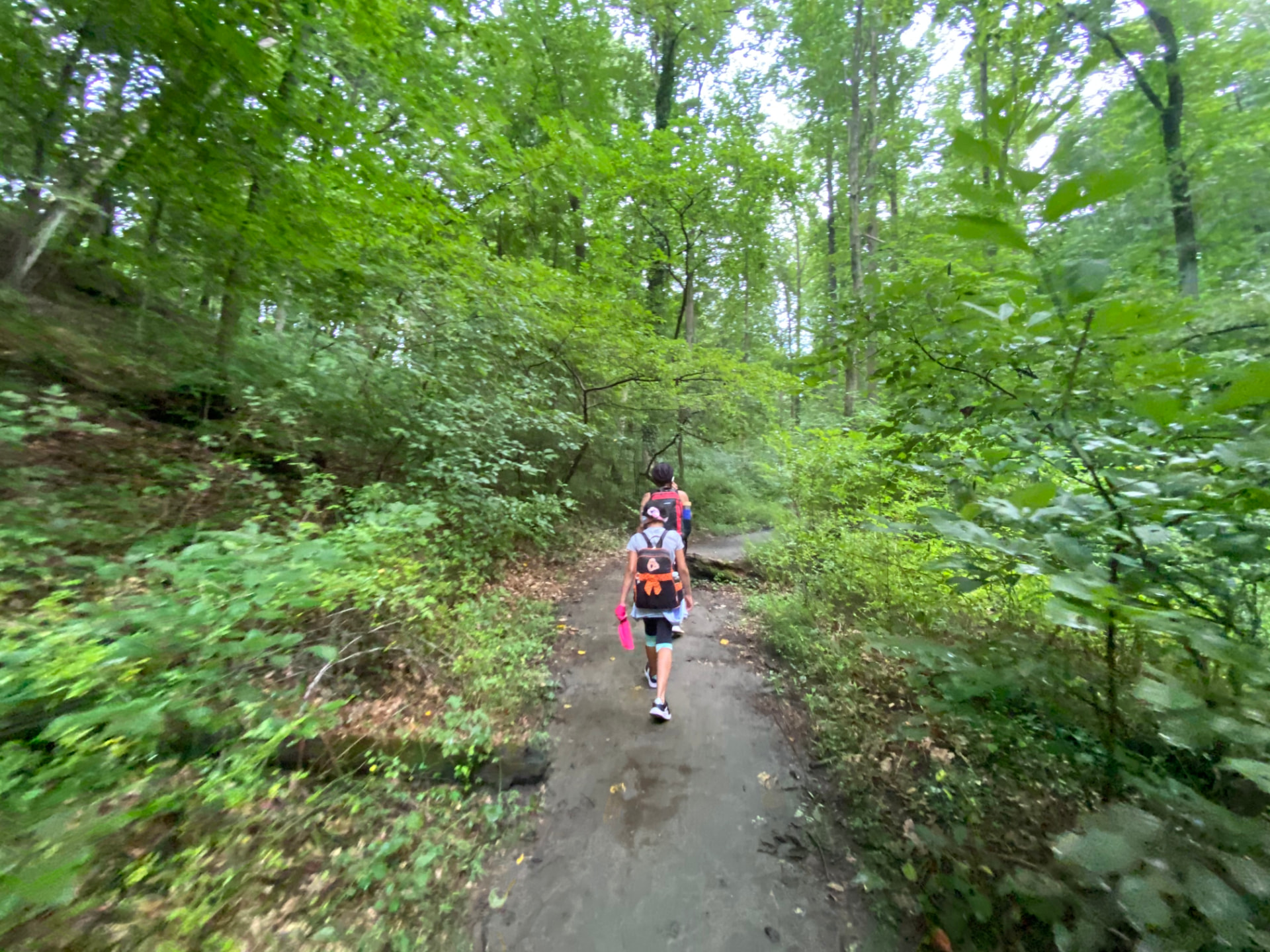
Sit together. Take a walk. Have lunch. Or just put the phones away and talk.
Ask them:
- What's something I do that makes you feel loved?
- What's something you wish I understood better about you?
- What's one thing you hope we always do together?
And here's the important part:
Listen without immediately correcting their answers.
You might learn something about them.
You might learn something about yourself.
And you might discover a little opportunity to grow together.
A Little Something to Reflect On
What did the people who raised me get right, what have I had to learn for myself, and what do I want to pass on differently?
Every Step Has a Story.
My Footsteps. Your Footsteps. Walking Together.
— Unfiltered Footsteps
My Footsteps. Your Footsteps. Walking Together.